Community benefit
Helping kids in crisis stay safely at home – their best option if possible
Learn how Intermountain Health’s SMR program helps children in behavioral health crisis get support at home and connect families with no-cost mental health resources
By Health 360
Updated
3 minute read
When a child experiences a behavioral health challenge, families often don’t know where to turn. Many turn to emergency departments and think about inpatient or residential care. These options may not always be the best place for mental health care and may add a layer of trauma to an already difficult situation.
Intermountain Health, through Intermountain Children's Health and Primary Children's Hospital, has been a leading partner in expanding pediatric behavioral health services across Utah and the Intermountain West. One of its most notable efforts is through a partnership with the Utah Department of Health and Human Services to operate the Stabilization and Mobile Response (SMR) program.
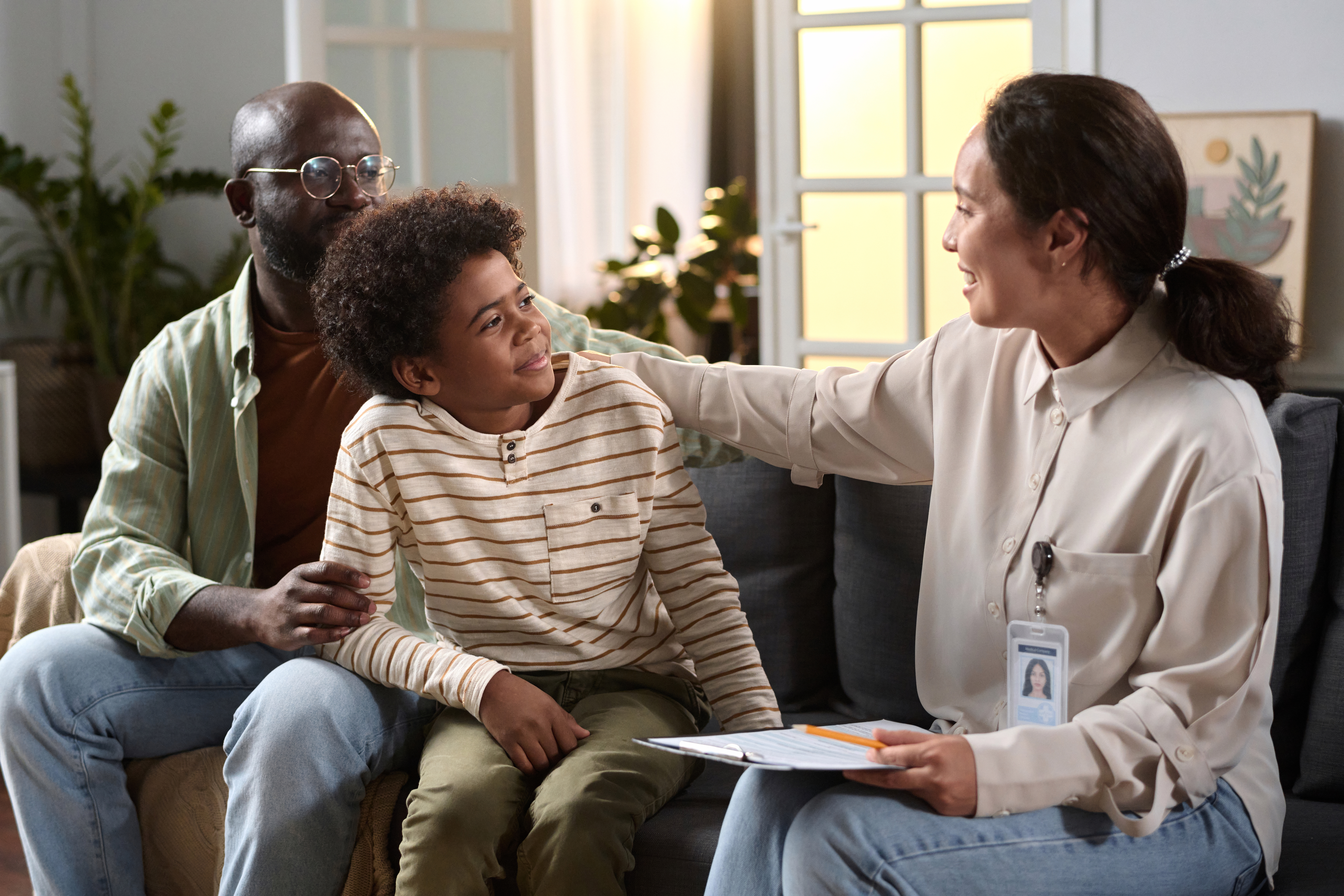
This service helps children and adolescents experiencing a behavioral health challenge receive care in their homes and communities rather than automatically being taken to an emergency department.
In simple terms, SMR provides:
- Immediate crisis response for youth experiencing behavioral health challenges.
- Mobile teams or telehealth support that can meet families where they are.
- Crisis assessment and safety planning to stabilize the immediate situation.
- Short-term, in-home follow-up services, often over several weeks, to help families develop coping strategies and connect to ongoing care and community resources.
While similar programs are offered in each state in Intermountain’s footprint, in Utah, the program is funded by the Utah Department of Health and Human Services (DHHS). DHHS contracts with local mental health authorities and Intermountain to provide services.
Intermountain holds the SMR contract in 10 Utah counties.
In Salt Lake County, Intermountain holds the SMR contract.
Bryan Wilde manages the SMR team out of Primary Children's Hospital – Taylorsville Campus.
“SMR reduces police involvement and emergency department visits by providing timely crisis intervention and ongoing stabilization,” Bryan Wilde said.
Bryan leads a team of eight full-time mental health clinicians and 15 social service workers who respond in pairs when behavioral health calls come in.
Jedediah Rushforth was awarded a L.O.V.E. Award after he was nominated by a family he served whose autistic teenager was in crisis.
“Jed had an exceptional ability to stay calm, grounded, and attuned, even in a highly stressful situation,” the nomination reads. “He helped my teenager self-regulate with dignity and respect, meeting them exactly where they are without judgment or pressure. Jed literally met him on the floor! His understanding of autism and emotional regulation was clear in the way he communicated, gently, clearly, and with genuine empathy.”
Families in Utah can call 988 or 1-833-SAFE-FAM to get help for their child, like this family did. Anyone in the U.S. can use 988 for immediate support for a mental health crisis for children and adults.
Support doesn't end after the crisis
A crisis may only last a few hours, but recovery takes time.
That's why Utah's SMR program also includes stabilization services, providing approximately 12 to 18 sessions over two months with both a clinician and a social service worker.
Together, they help children and caregivers strengthen emotional regulation, improve communication, build coping skills, and practice strategies for managing future challenges.
Parents also receive coaching and support, helping them feel more confident responding to difficult situations at home. It helps families build the skills and support they need to move forward together.
All stabilization and mobile response services are provided at no cost to families in Utah.
Helping families build emotional resilience before a crisis
While clinicians are providing SMR, the Community Health team focuses on educational and preventive resources.
Intermountain Community Health also focuses on giving families practical tools they can use every day to help children understand emotions, cope with stress, and build resilience long before a crisis develops.
"We know from our Community Health Needs Assessment and other data that this is the number one need in the communities we serve," says Doug Thomas, director of Community Health, Children's Health. "We provide resources like our Feelings Wheel, Talk to Tweens workbooks, and other resources to parents to teach their children how to express feelings, adjust to emotional challenges, tolerate frustration, cope with life stressors and enjoy life."
One of the most popular resources is the Feelings Wheel, which helps children identify and name emotions that can sometimes be difficult to express.
Instead of describing everything as simply "good," "bad," "happy," or "mad," children can begin recognizing more specific emotions such as frustrated, overwhelmed, hopeful, lonely, embarrassed, or grateful.
That simple conversation can become the first step toward helping children understand what they're experiencing and ask for support when they need it.
Families can also access free workbooks, videos, and online resources covering topics such as anxiety and stress, social health, managing difficult situations, emotional well-being, and healthy coping strategies.
These tools are designed to make conversations about mental health feel less intimidating and give parents practical ways to support their children at every stage of development.
“I'm so grateful I had someone I could call when I don't know what else to do for my depressed teen,” one family shared. “It feels like there is nothing you can do unless your child is actively suicidal. This is a great middle space that saved us an ER visit and gave me support and expert advice! Thank you for developing the desperately needed program!!”
Mobile response and stabilization services help make sure children get the right care at the right time, in the place they feel safest. That means faster support, less trauma, and stronger involvement for families.
Additional resources for families
While clinicians are providing SMR, the Community Health team focuses on educational and preventive resources. All families can access Intermountain's emotional well-being page with resources to support children and families.
“We know from our Community Health Needs Assessment and other data that this is the number one need in the communities we serve,” said Doug Thomas, director of Community Health Children’s Health. “We provide resources like our Feelings Wheel, Talk to Tweens workbooks and other resources to parents to teach their children how to express feelings, adjust to emotional challenges, tolerate frustration, cope with life stressors and enjoy life.”
Doug also notes that the team has prepared short videos tweens, teens and parents can watch for new ideas on how to deal with some of the daily mental health challenges they face.
“I'm so grateful I had someone I could call when I don't know what else to do for my depressed teen,” one family shared. “It feels like there is nothing you can do unless your child is actively suicidal. This is a great middle space that saved us an ER visit and gave me support and expert advice! Thank you for developing the desperately needed program!!”
Mobile response and stabilization services help make sure children get the right care at the right time, in the place they feel safest. That means faster support, less trauma, and stronger involvement for families.