Cancer care
Melanoma: I Didn’t Think It Was Serious—Until It Was
Carrie’s melanoma experience changed how she saw herself, deepened her compassion, and helped her turn a difficult season into purpose for other women facing cancer
By Carrie Christensen
Updated
3 minute read
Before my diagnosis, I had just graduated from BYU with a business degree and was working full-time in product management. I was close with friends and family and had recently qualified for the Boston Marathon. Running was a huge part of who I was.
I’ve always had a lot of freckles—probably more than 100—and had a few checked before as a precaution. I felt completely healthy, so when I went to the dermatologist at the end of 2024, I didn’t think much of it.
A few days before New Year’s, I got a call that they had found melanoma and wanted to refer me to a surgical oncologist. I was scared, but I was also told not to be alarmed—that it didn’t need immediate attention. I even went on a family beach trip and told myself, “If it were serious, they’d have me come in right away.”
Two weeks later, I went to my appointment, not even fully understanding what an oncologist was. I thought maybe they’d just need to remove a little more skin.
The surgery itself went smoothly, and when my doctor called a few days later, I assumed he was just checking in. I had no idea he was calling with more news. The melanoma had spread to lymph nodes in both of my armpits. What we thought was an early-stage diagnosis was actually stage 3.
From there, I was referred to Dr. Caroline Nebhan, a melanoma specialist at Intermountain Health. In that visit, we talked through immunotherapy, how it differed from chemotherapy, and the possible impact treatment could have on fertility.
One of the things that made a big difference for me was my connection with Dr. Nebhan. She’s a younger doctor whose spouse is an endurance athlete, so she understood the time and discipline I had invested up to that point. Additionally, I was so grateful for a female doctor who could discuss the impacts on my fertility.
Because of my age and the treatment I would receive, Dr. Nebhan also talked with me about the potential impact on my ability to have children in the future. Having a family is really important to me, so I quickly decided to pursue fertility preservation before starting treatment.
Once I made that decision, everything moved quickly. I had about a month before treatment began, so I was going to appointments every other day, giving myself daily injections, and making decisions about my future family at 24, while single and overwhelmed. The process was not comfortable—physically, emotionally, or in any respect.
At the same time, I was trying to keep up with work while constantly leaving for appointments, scans, and tests. My employer was supportive, but it was hard not to feel like I wasn’t showing up the way I wanted to.
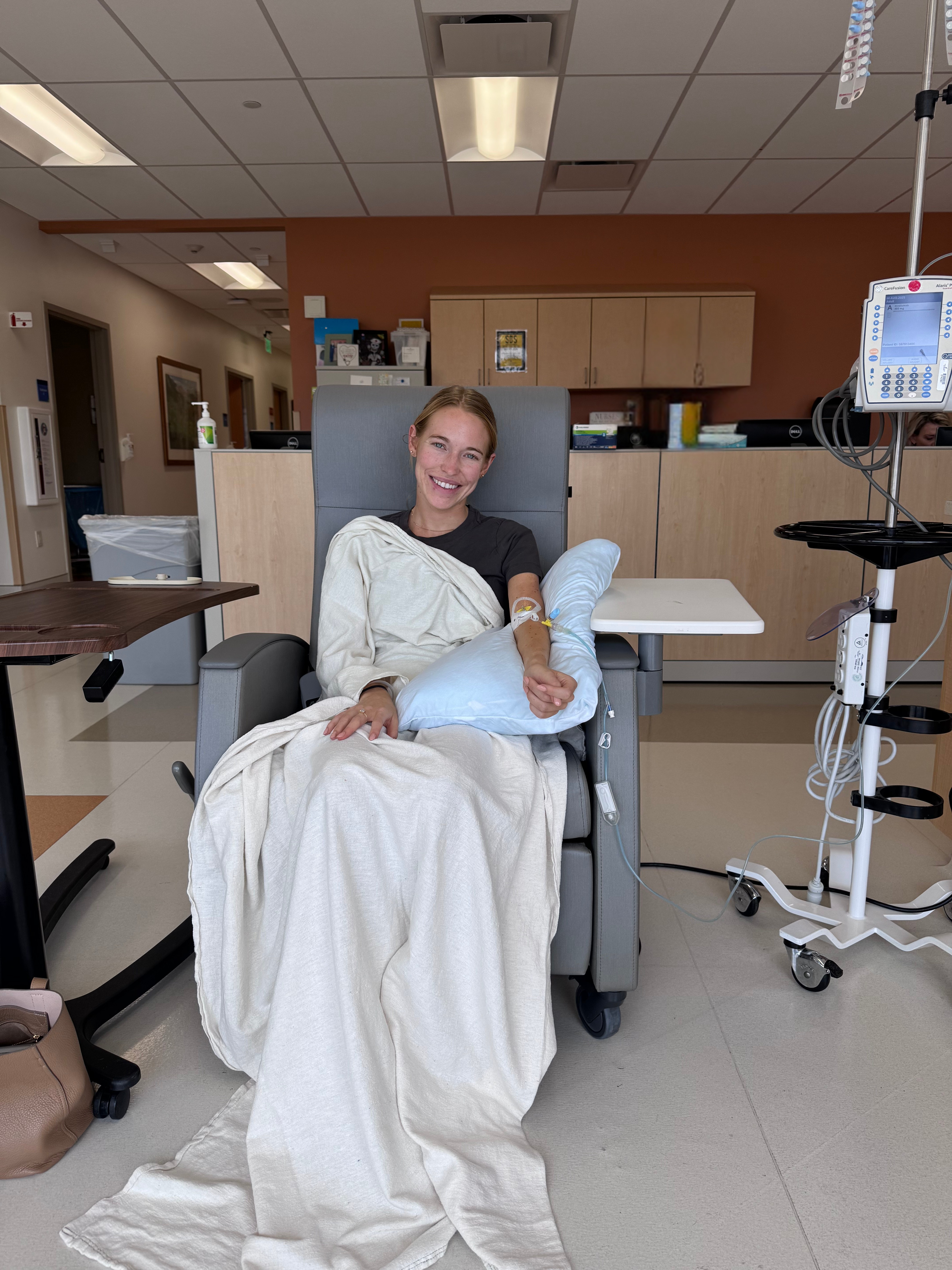
Treatment started shortly after. I received immunotherapy for about a year. I still had side effects—fatigue and nausea—but overall I could stay active and continue doing many of the things I loved.
Today, my scans show no evidence of melanoma.
Looking back, one of the hardest parts was feeling like I didn’t know anyone else my age going through something similar. Cancer can feel especially isolating as a young adult.
What helped most was the people around me. Friends, family—even people I didn’t know well—showed up with so much love and support. It reminded me that even when people don’t fully understand what you’re going through, they can still walk beside you.
That experience also led me to ask a question I couldn’t ignore: how do other young women pay for fertility preservation before cancer treatment, especially when cost is such a barrier? I learned that some women delay treatment, take on debt, or forgo fertility preservation because of the financial strain.
After going through it myself, I felt a strong pull to help. Cancer is already hard enough—this doesn’t need to be another layer of stress. That’s what led me to start my nonprofit, Future Blooms, which helps female cancer patients pay for fertility preservation before they begin cancer treatment.
This experience changed how I see myself and what matters most. Before cancer, I defined myself by achievements. During treatment, that shifted. I had to ask: who do I want to be when those things are taken away?
For me, the answer became clear: I want to be someone who shows compassion, serves others, and finds purpose even in hard things.
If I could say anything to someone newly diagnosed, it would be this: I’m so sorry you’re going through it. It’s unfair, and it’s hard.
But there is still good ahead. There is still joy, even in the middle of difficult days. And there are people who will show up for you in ways you might not expect.